
Arcads alternatives for AI UGC ad production
Compare roasOS, Creatify, MakeUGC, Maxfusion and Starpop by the workflow you need, then use a practical trial scorecard.
By Janice Phil · Growth · Published
In this article
Choose an alternative by the work you need done
An Arcads alternative should solve a specific production problem: preparing references, generating an actor scene, creating product visuals, organizing variants or revising an ad. Switching because another homepage promises more output can leave the original bottleneck untouched.
This is a roasOS-published comparison based on official product pages reviewed October 6, 2026. It is not a hands-on benchmark of every platform. Features, plans and model access can change; check the linked source and the live purchase terms before choosing.
A workflow-based shortlist
Arcads remains a reasonable candidate if its actor and ad-production workflow already fits the team. An alternative is most valuable when it improves a task you can name and measure, not when it wins an abstract feature count.
| Platform | Reason to evaluate | What to verify in a trial |
|---|---|---|
| roasOS | UGC, product imagery and creative work in one workspace | The required input mode, model controls and review process |
| Creatify | Chat-led ad creation with product inputs | How well revisions preserve your brief and product |
| MakeUGC | Actor-led UGC and product-in-hand workflows | Product handling, voice and the export you need |
| Maxfusion | Creative production, research and assembly workflows | Team handoffs and your complete revision path |
| Starpop | Research-led ad concepts and creative workflows | How research translates into usable output for your product |
Where roasOS fits
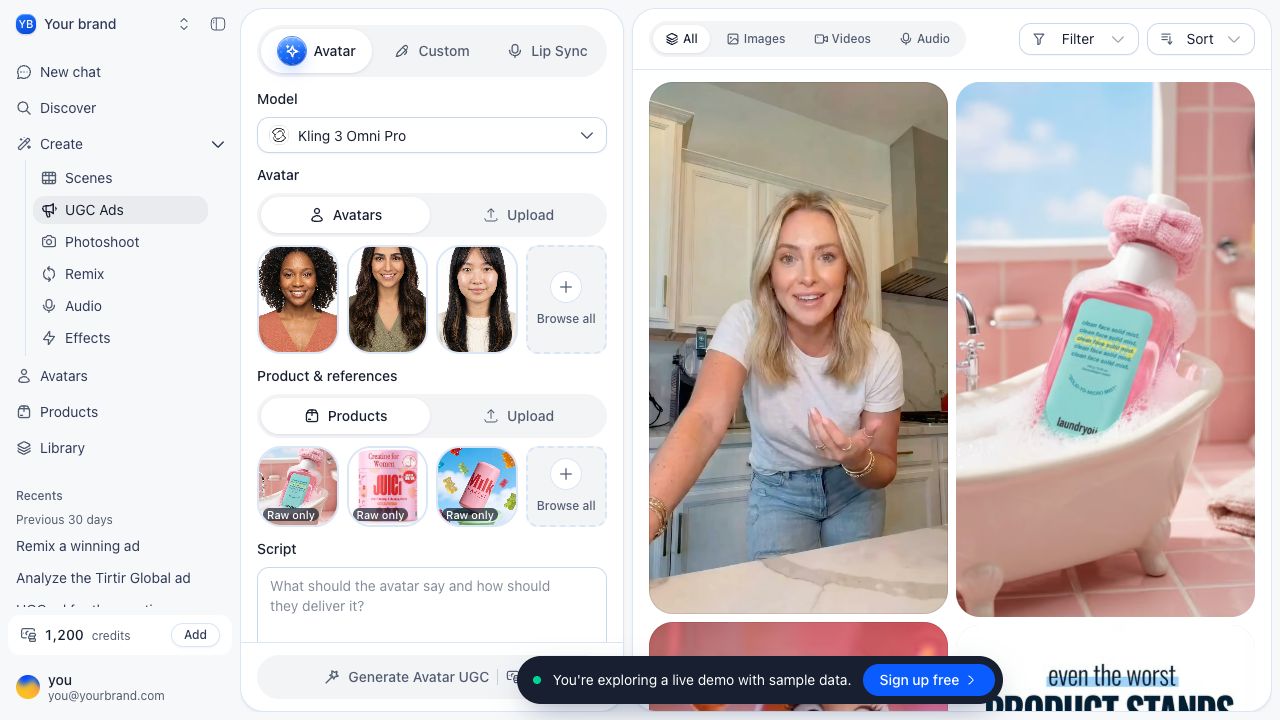
roasOS is worth evaluating when your creative work spans avatar scenes, product images and ad variations. The UGC workspace separates Avatar, Custom and Lip Sync modes, with controls that depend on the selected model. Product and avatar references can be part of that workflow.
Open the demo to inspect the interface, but remember that its sample library does not prove how a new generation will handle your product. A production trial should use your own authorized assets and a brief you can review against clear acceptance criteria.
Run the same small trial on each candidate
Use a script with one spoken product name, one visible product action and one required revision. Keep the source image and duration target the same where supported. Document any capability mismatch rather than quietly changing the test to favor a tool.
Score first-output usability, revision effort, packaging accuracy, voice quality and delivery format. Include the time spent fixing the result outside the platform. A low generation price is less helpful if every clip needs extensive repair.
Ask what happens when the output fails, which plan includes the model you selected, and whether advertised allowances cover that model. Record the date and plan. Promotional credits and monthly subscriptions should not be treated as interchangeable pricing units.
Make the decision from your accepted output
Choose the workflow that reliably gives your team material it can approve. If Arcads already does that, there may be no reason to migrate. If the trial exposes a consistent limitation, document it and compare the relevant alternative directly.
For a next step, run the same brief in roasOS and your current tool. Keep the comparison private until you have permission to share the assets, and publish performance claims only when you have evidence beyond production quality.