
Turn one AI UGC concept into testable ad variations
Build a variation matrix that separates concepts from executions and keeps each creative change easy to understand.
By Janice Phil · Growth · Published
In this article
Separate a new concept from a new execution
A concept is the reason the audience should care. An execution is how you present that reason. Changing the actor on a product-size demonstration is usually a new execution; switching from product fit to an entirely different buying problem is a new concept.
Both can be useful, but label them separately. A folder with twenty exports is not necessarily twenty distinct ideas. A clear matrix helps a team spend its production effort on differences it can learn from.
Start with a small variation matrix
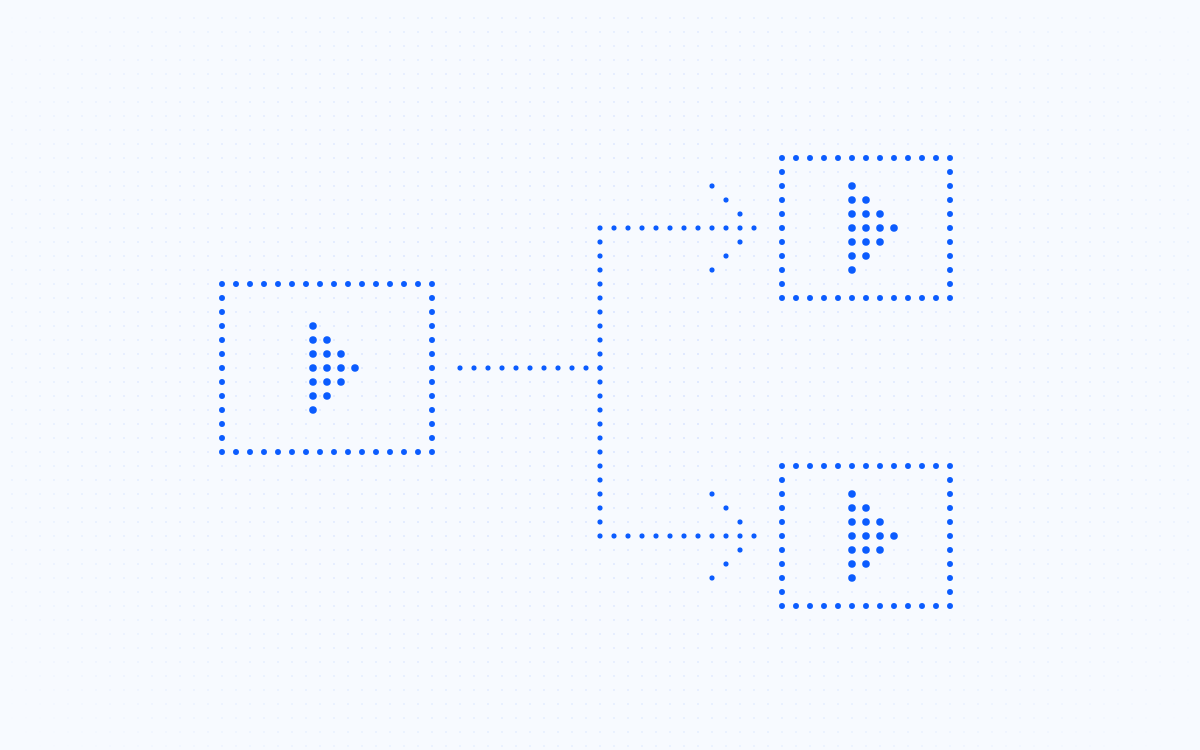
For a hypothetical travel bottle, first compare three buying questions while keeping the product, presenter and destination stable. Then vary the execution of a promising concept. This is a planning example, not a campaign result.
| ID | Concept / change | Keep fixed |
|---|---|---|
| fit-a | Will it fit in the bag? | Product, presenter, destination |
| open-a | How does the opening work? | Product, presenter, destination |
| contents-a | What is included? | Product, presenter, destination |
| fit-b | Fit concept with a different opening line | Body, presenter, offer |
| fit-c | Fit concept with a different presenter | Script, product, offer |
Lock the product and casting references
Keep a stable reference pack for each concept. If a generated variation changes the packaging or introduces an extra accessory, it has failed the brief even if it looks more polished. Use the same product identity across the set.
The avatar below is an existing roasOS demo reference. It illustrates a casting input, not a finished variant or evidence of better performance than another actor.

Resolve the difficult scene before batching
Create and approve the hardest part of the base ad first. That might be product handling, a specific pronunciation or a transition between two shots. Once the base works, produce the variations you planned rather than adding unrelated ideas during generation.
Keep file names tied to the matrix and store the prompt, references and settings. A useful record explains what changed and why. Avoid relying on model seeds or identical settings as a promise of identical visual output.
Review the final exports, not only the source clips. Captions, crop and audio levels can create differences that were never part of the intended test. Make sure the destination and offer remain accurate for every version.
Use results to choose the next question
Before launch, agree on the evidence that will support a decision. An ad receiving little delivery may not provide a fair comparison. Early views can identify an opening problem, while downstream actions help determine whether the message attracted the right people.
After the review, write one sentence per creative: what the evidence suggests, what remains uncertain and what to change next. Keep hypotheses separate from proven causes. A new actor and a new opening cannot both be credited for the same difference without a suitable comparison.
The next production batch should follow those questions. If the product demonstration is unclear, improve the demonstration before creating ten more hooks around it.